In Quest of a Tweet

I’ve been in Sardinia less than two weeks, and I’ve been called out twice for not doing enough to share my research in Italian. It’s a fair criticism. I gave a well-attended public lecture in Italian at the end of the excavation I co-directed with Dott. Mauro Perra in 2009-2011, but since then I’ve done very little. The reasons are complex, and I did offer to give five weeks of public lectures on local archaeology in the summer of 2014, but it was eventually decided that English lessons would be a bigger draw (and I have to say, I delivered my English lessons to a packed house, and many Siddesi still greet me on the street with an accented “how are you”).

But the criticism stands, and the fact is archaeologists face a variety of challenges that can discourage us from speaking directly to the communities where we work. Combatting this issue is one of the missions of Public Scholar Outreach, a non-profit organization that two colleagues and I founded this year. It’s also the reason why the book I’m preparing with Dott. Perra to publish the results of our excavation will have summaries of each of the chapters in Italian. But the book won’t be out for a couple of years, and that’s too long to wait to start redressing this problem.
IMG_6395
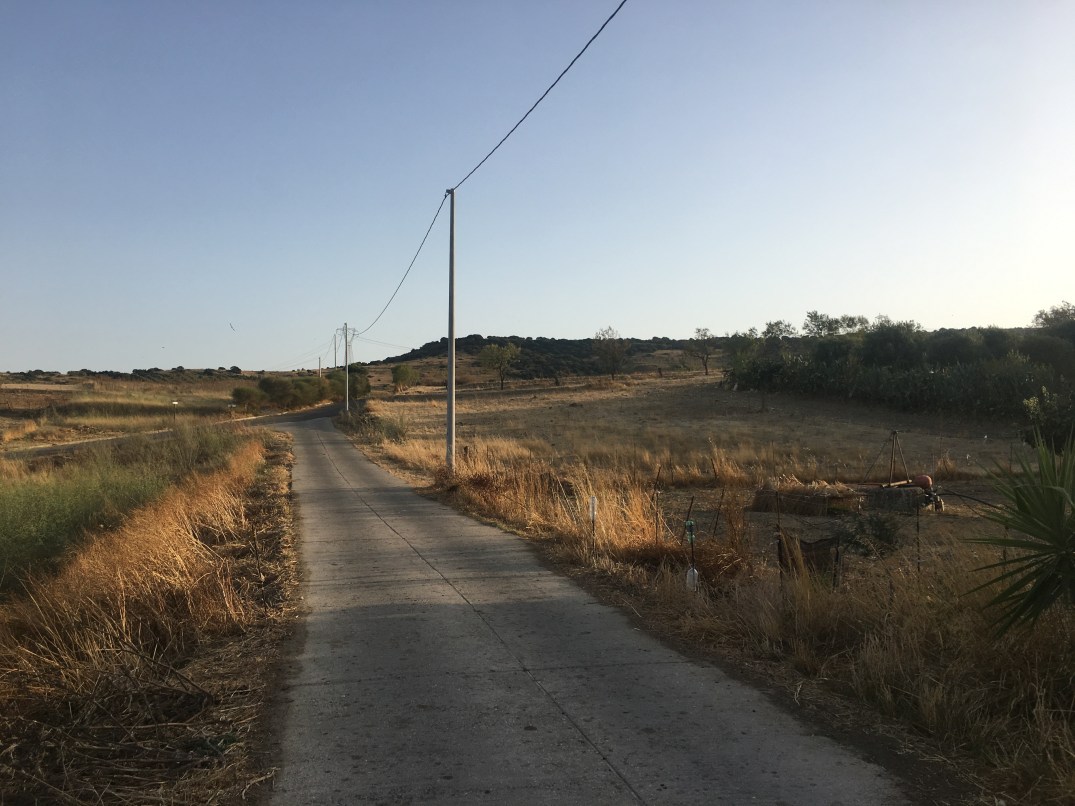
On my way to Sa Fogaia

Which is why I found myself trekking through Siddi’s countryside at sunset in search of tweet-worthy images of local archaeology. Italy celebrates European Heritage Days this month (September 23/24), and so in honor of Sardinian heritage, Public Scholar Outreach is featuring a full month of bilingual tweets and Facebook posts celebrating the archaeology and history of this beautiful island (follow us @ScholarOutreach).

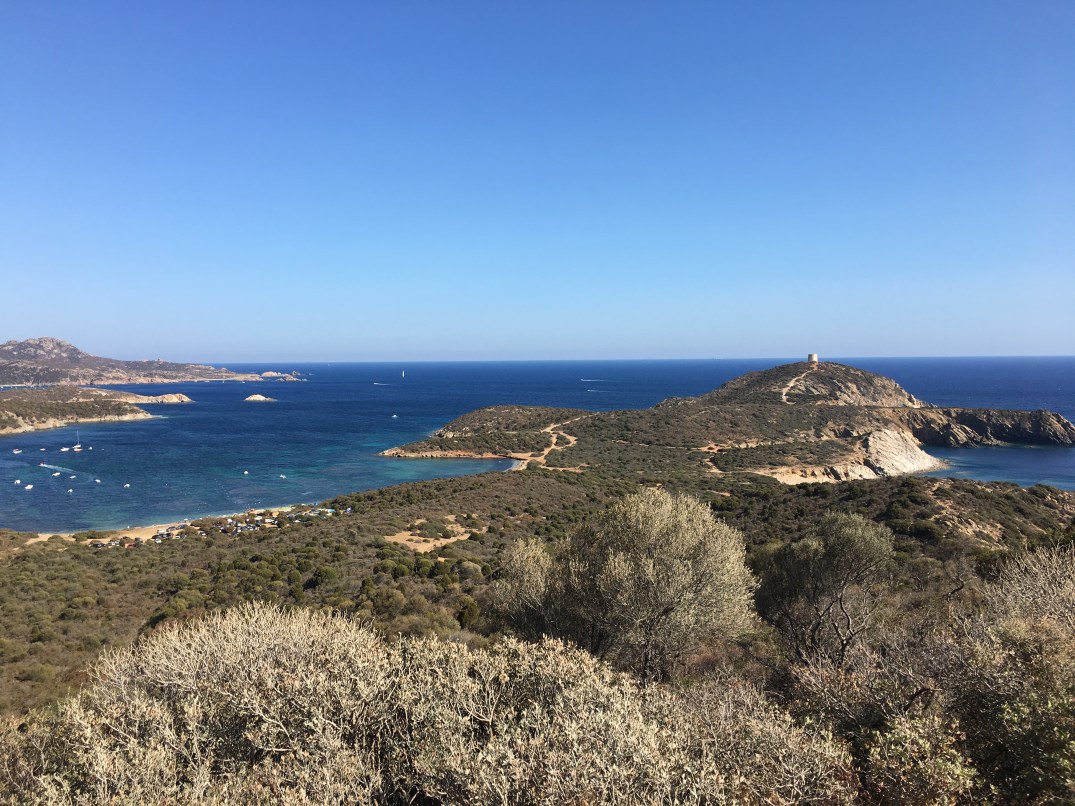
I set off just after 6pm, phone in hand, to capture the fading light at one of my favorite monuments: the corridor nuraghe Sa Fogaia. Corridor nuraghi date to the early development of the Nuragic Culture during the Sardinian Middle Bronze Age (c. 1700-1365 BCE). They don’t reach the impressive heights of the later tholos nuraghi, but many – including Sa Fogaia – are complex structures with several chambers, multiple stories, and architectural features that suggest successive building episodes. Corridor nuraghi are often treated briefly in the scholarly literature. Few have been well excavated and even fewer published, and in many corridor nuraghi, later reuse destroyed the early Nuragic deposits, so even careful excavation may result in limited new information.

Because the corridor nuraghi are less frequently excavated and their deposits often damaged, our understanding of the early development of the Nuragic Culture is limited. Raising interest in these structures is one way to encourage more research to get done. So I walk. The most direct path to Sa Fogaia climbs a few gentle hills and then rises steeply up the side of the Siddi Plateau, the site of an important Middle Bronze Age settlement system of which Sa Fogaia is only one part. I pass a shepherd and his flock, and we exchange a few words about the coolness of the evening after the painfully hot day. He’s not someone I know, and he seems pleased that a foreigner is on her way to see the nuraghe. “There are lots on the plateau,” he tells me. I nod.
 

IMG_6406
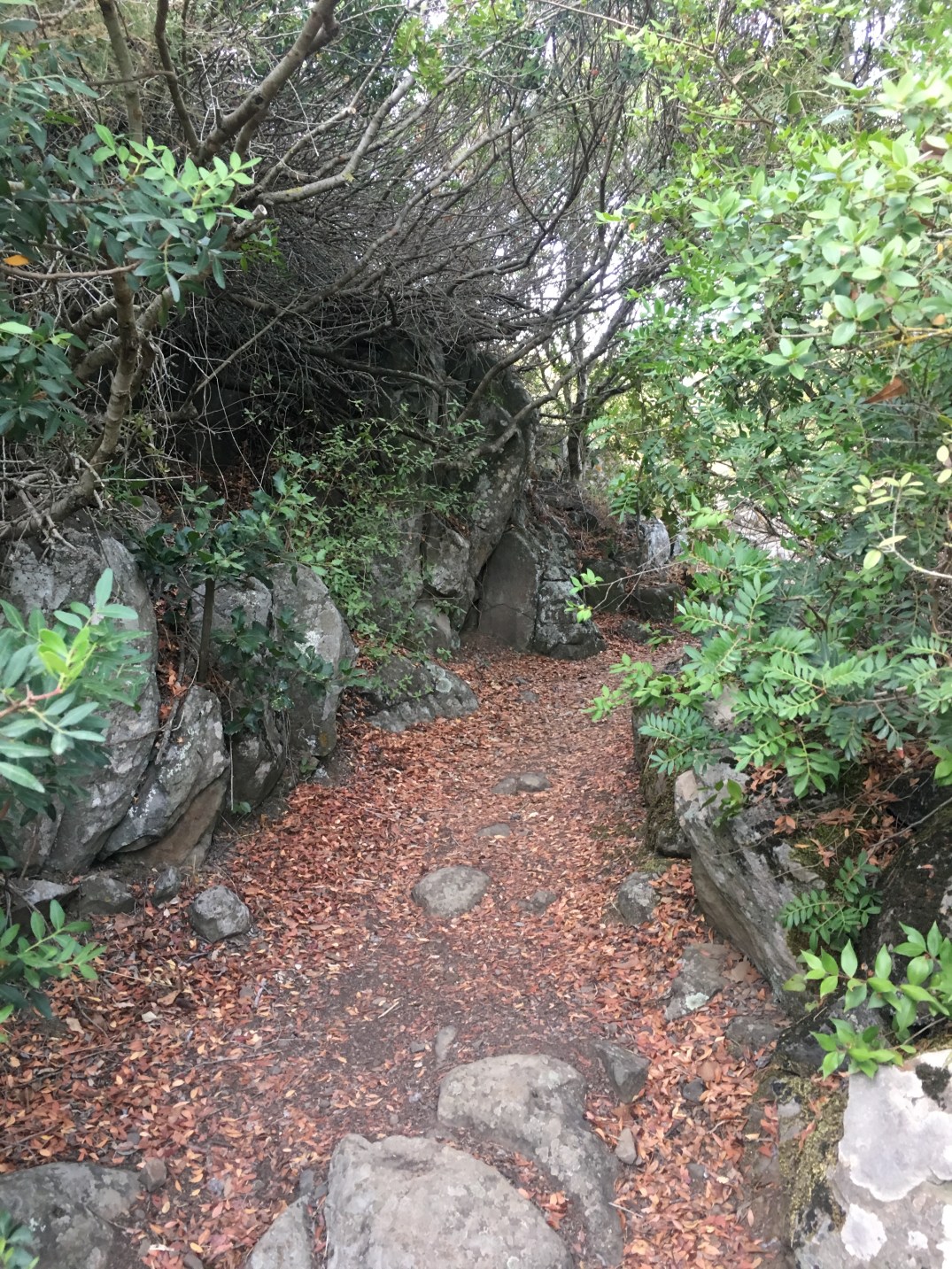
The last few meters up the wooded sides of the plateau

It’s a sweaty climb to the top, but the view, as always, is worth it. Sa Fogaia glows in the slanting sunlight and I get several good photos for Facebook and Twitter. Turning these photos into informative posts and tweets that will encourage people to engage with Sardinian archaeology is a whole other challenge, of course, but tonight I’ve taken an important first step.

IMG_6407
Made it!


Vendemmia

Yesterday was my first day back in the deposito, and I was delighted to find it in great shape: everything where I left it, the electronic equipment still working, no mold anywhere. There was barely a spider that had set up a web among the bags of pottery. While I’ve been away, the Comune even came and attached the plumbing, so whereas last year we constantly carried equipment to an outdoor tap to wash it, this year I have a functioning sink right in the lab. (Tante grazie al Comune di Siddi!)

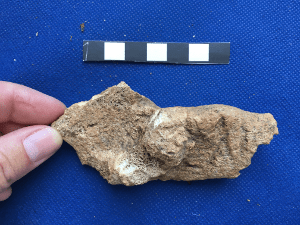
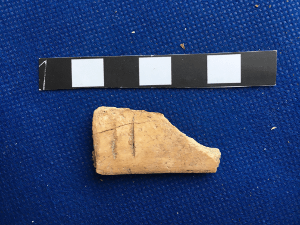
There was one negative surprise, however. It turns out that the bones I was convinced were stored in the deposito are currently housed in a museum in another town about 5 km away. These bones are, of course, precisely the materials I came here to study.

It isn’t a major problem, and if it’s the worst thing that happens during the study, I’ll be in great shape. Still, archaeology is surrounded by bureaucracy in almost any country, and Italy is not an exception. Taking those four crates of bones, putting them in a vehicle, and driving them 5 km to the deposito will take days. There will be permit applications, calls to the Soprintendenza, organizing a day when we can use the Comune’s truck…

So when a friend asked me if I wanted to spend this morning helping him harvest his vineyard, I said sure!

IMG_6299
In the vineyard before the sun, the heat… and the wasps

I got up at 6am and dressed for fieldwork – my Northface pants, a long-sleeved shirt with a high spf rating, hiking boots, work gloves, sunscreen, a hat. Then we drove to the vineyard – a short distance outside the town – where we met five friends who were also lending a hand.

IMG_6301
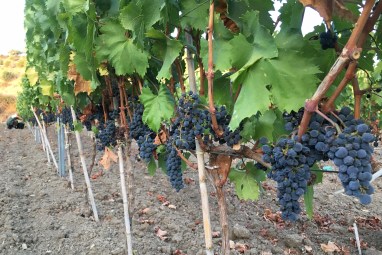
Bunches of bovale wrapped around the wire trellises

It’s a small vineyard divided between two Sardinian grapes – bovale and monica – with a row of table grapes as well. We started with the bovale, which was difficult to harvest. The grapes are small and the clusters grow in tangles with themselves, the branches of the vine, the wire trellises the vines are tied to, really anything they can wrap a tendril around. It was hard work just figuring out where to cut, and even then we had to untangle the grapes before they would fall into our large plastic baskets.

The monica was simpler. The grapes are slightly larger and the clusters tend to hang down one by one. It was easier to see the stems, to insert our shears among the leaves and branches, to gather the clusters once they were cut. All in all, the seven of us made short work of the harvest. We finished before 9am, when the air was still too cool for the wasps to come out, but late enough that we could tell today was going to break 37°C (100°F) again. Another hot day in a series of hot days in a series of dry weeks stretching back for months. The effect of the drought was clearly visible in the grapes, some of which appeared to be drying on the vine before they had even fully ripened.

IMG_6311
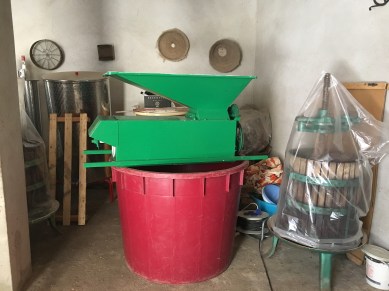
The crusher made short work of separating the grapes from the stems

The wine production takes places in my friend’s garage, and the first step was to turn our fresh grapes into must. We slowly poured each basket into an electric crusher, which spat out the stems – or most of them – and dropped the juice and crushed grapes into large plastic vats below. At the end, the vat of bovale was knee-high, and the vat of monica was only slightly lower. They told me it wasn’t much this year because of the drought, but it still looked impressive to me.

The must has to stand for a week to let the fermentation begin. We’ll go stir it a few times, then press it and bottle it. It seems almost too simple to result in the excellent wine I’m used to drinking at my friend’s table.

“È tutto?” I ask in some disbelief.

“È tutto,” they assure me.

We can’t resist tasting our work before we go. There’s a fine screen we press down on the must to let just the juice through, then we scoop up the juice in a plastic cup. Both are delicious. The bovale is intensely sweet and rich tasting, the monica slightly less sweet with a flavor closer to table grapes. Some complain that it’s too sweet, but it seems the intense sugar is expected in a drought year. Drought years produce little wine, they tell me, but the wine you get is very good. I’ll have to return next summer and see.

fullsizeoutput_132
Sweet, delicious, fresh-squeezed juice


Sea and Sardegna

Vacation has come to an end. Tomorrow I go to the Comune to request keys for the deposito where the artifacts are stored. I start designing a database to record the bones in my zooarchaeological study. I buy a good desk lamp. I park myself in the Biblioteca Comunale and take advantage of the free wifi to answer a long list of emails. I go through the proofs for my edited volume.

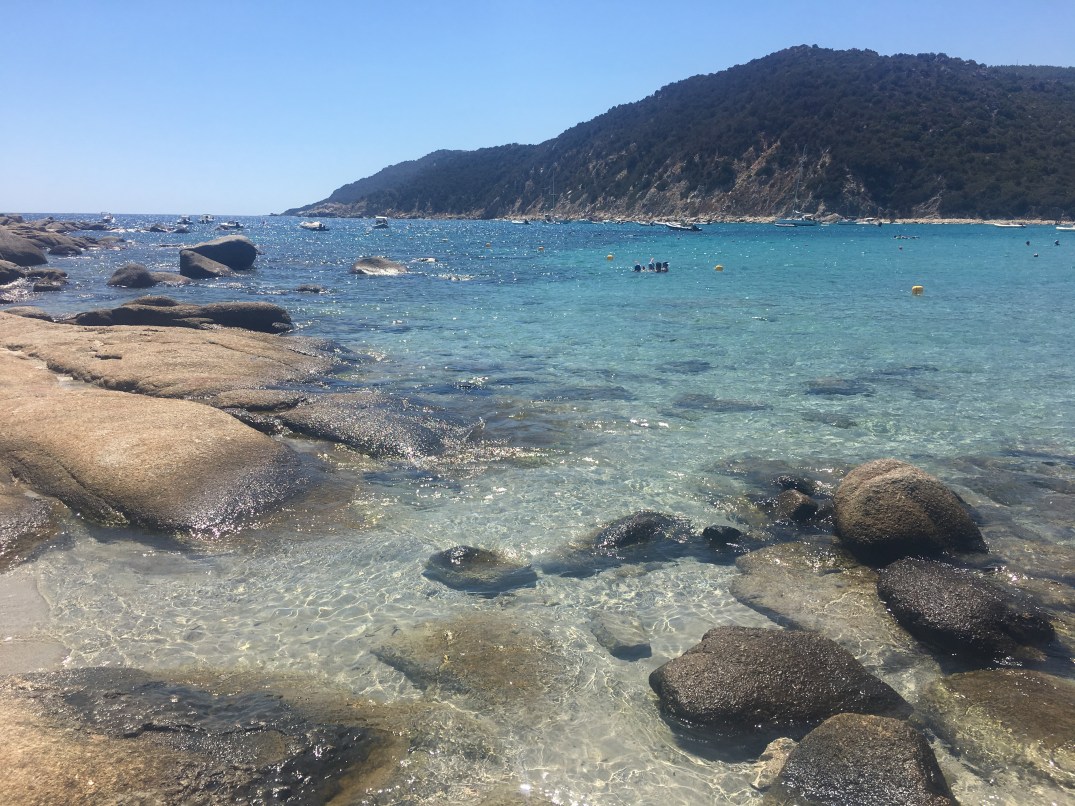
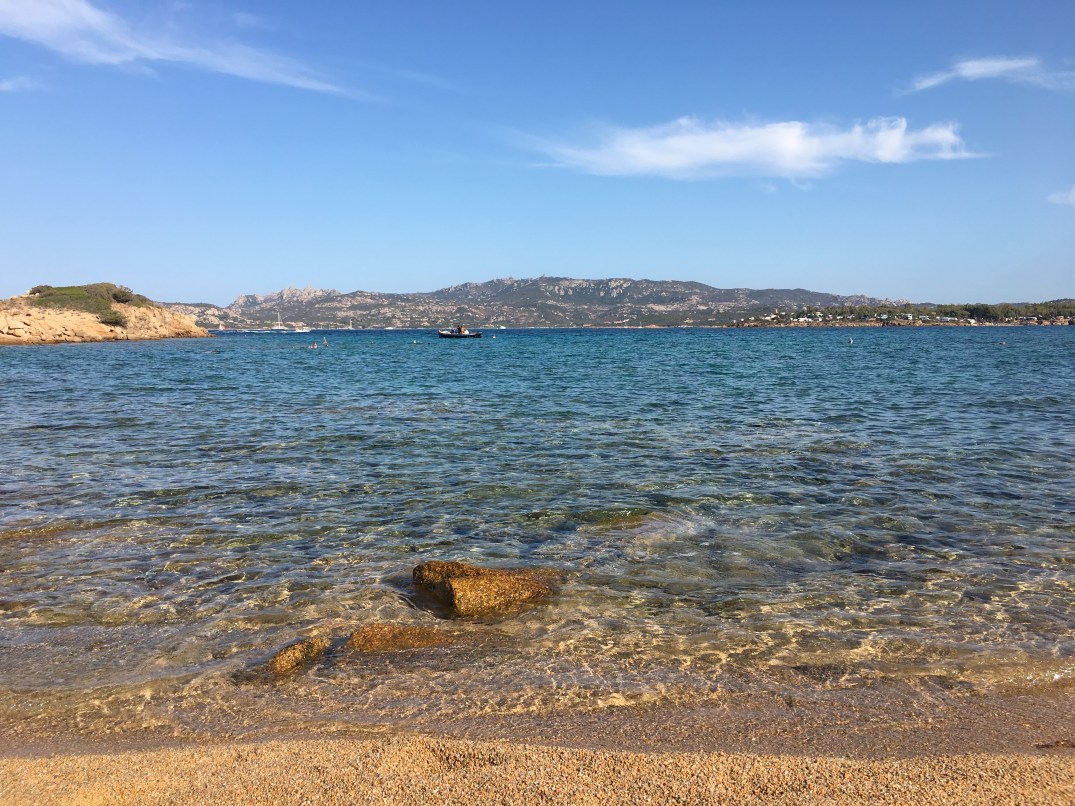
But this week of vacation has been glorious, spent relaxing with friends on several of Sardinia’s beaches, and Sardinia’s beaches are gems. They tend to be small – narrow strips of sand caught between junipers and jutting rocks – reached only after turning off the road and driving several minutes down a dirt trail.

There’s often a kiosk selling coffee and gelato, maybe a simple restaurant, and that’s generally it in terms of services: most beaches are minimally “improved.” The ideal of the wild beach, sometimes reached only after leaving the car in an unpaved parking lot and hiking an hour down a dry riverbed, is one many Sardinians hold dear.

I have to agree with them. The beaches I saw this week weren’t even among the really wild, and they were stunning in their natural beauty. It’s hard to describe them without sounding cliché. The water deepens from aqua to almost purple as you look toward the horizon. It’s so clear I often watched my shadow on the rippled sand below me as I swam. Rising behind the beaches are slopes of rock and evergreen maquis broken only by occasional clumps of houses. Even these houses are the source of some complaint – my friends love to recount how, a few decades ago, there weren’t so many houses and the beaches were truly wild.

I find myself torn between wishing more people knew about the beauty of Sardinia and fearing that one day they will. That one day, not only the Costa Smeralda but also the Costa Rei will be covered with slick palazzi and high-end boutiques. That the Costa Verde will turn from a wildlife refuge to a stretch of strip malls. Most Sardinians show admirable stewardship of their lovely beaches: they don’t take the sand or rocks or shells, they do take all their garbage. I just hope further development will be in this same Sardinian spirit.

Cala Pira
The crystal waters of Cala Pira, near Costa Rei
Chia
The soft sands of Chia, in the south
Near Chia
Following the coast from Chia
Palau
A pebble beach near Capo d’Orso, in the north

Coming Home

I once went to a psychologist whose website listed “family of origin” issues as among her specializations.

“What’s a family of origin?” I asked at our first meeting.

“You know, the family you’re born into rather than the family you choose.”

She said it like it was obvious, but it was new to me and the idea stuck. Some things we’re born into, and some things we choose, and both have deep emotional reality, the chosen no less than the ones we happen into at birth.

This thought occurs to me every time someone asks me where I’m from. “Where are you from” means different things to different people. When an academic asks me, it means what university I teach at or where I got my PhD. When a stranger asks me, it means the last place I lived long enough to hold a job and put down roots. But that’s a northern stranger, to be sure. A southerner once asked me while we were waiting at US customs after returning from abroad.

“I never know how to answer that question,” I waffled. “I move around a lot. I was teaching in Buffalo last year, but I also work in Sardinia…”

“Where were you born, honey?”

“I was born in Ohio.”

“Then you’ll always be from Ohio.”

Okay, yes, I guess that’s true: Ohio is my home of origin. But the other homes I get to choose.

Yesterday, I came home to Sardinia. Stepping off the airplane felt like putting on a good pair of running shoes or a favorite dress that still looks hot: simultaneously comfortable and ready for action. I picked up my rental car, slipped into the muscle memory of driving a manual transmission (which I never do in the states), and took off for the town of Siddi where I’ve been doing archaeology for the past eight years. There are hiccups, to be sure – my Italian isn’t as fluent as it will be after a few weeks of speaking – but it comes back quickly, enough so that the waiter serving my lunch started out in English but joined me in Italian after a few short exchanges.

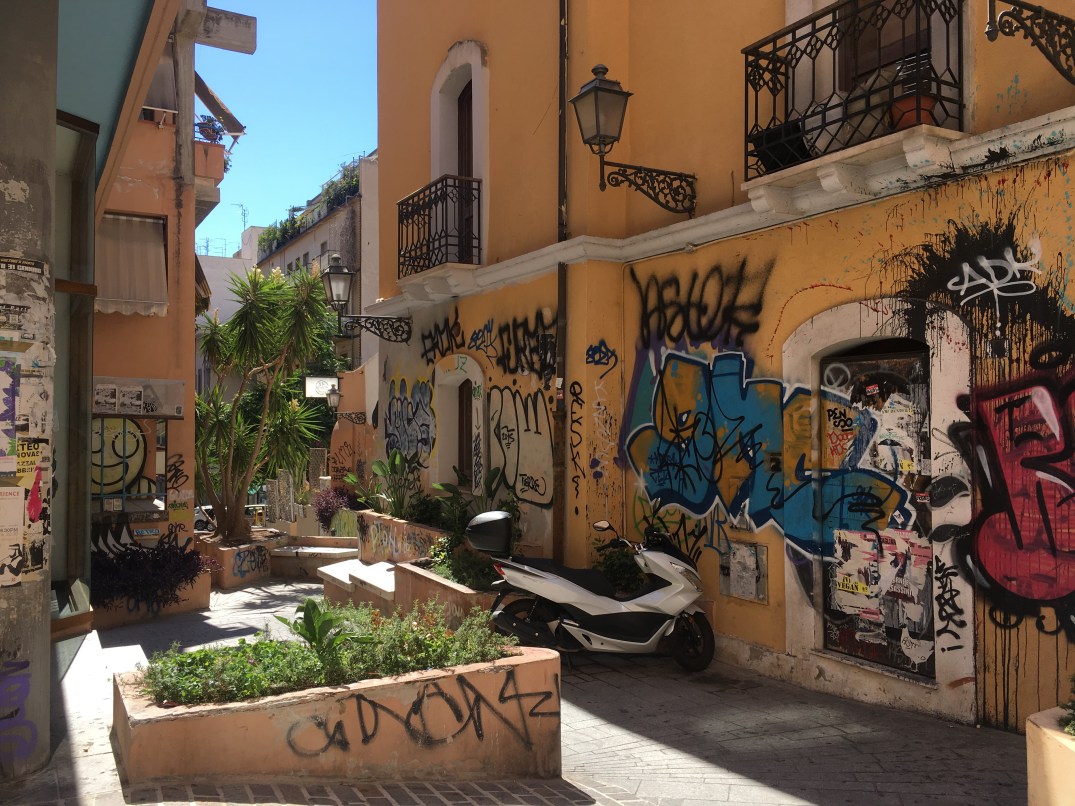
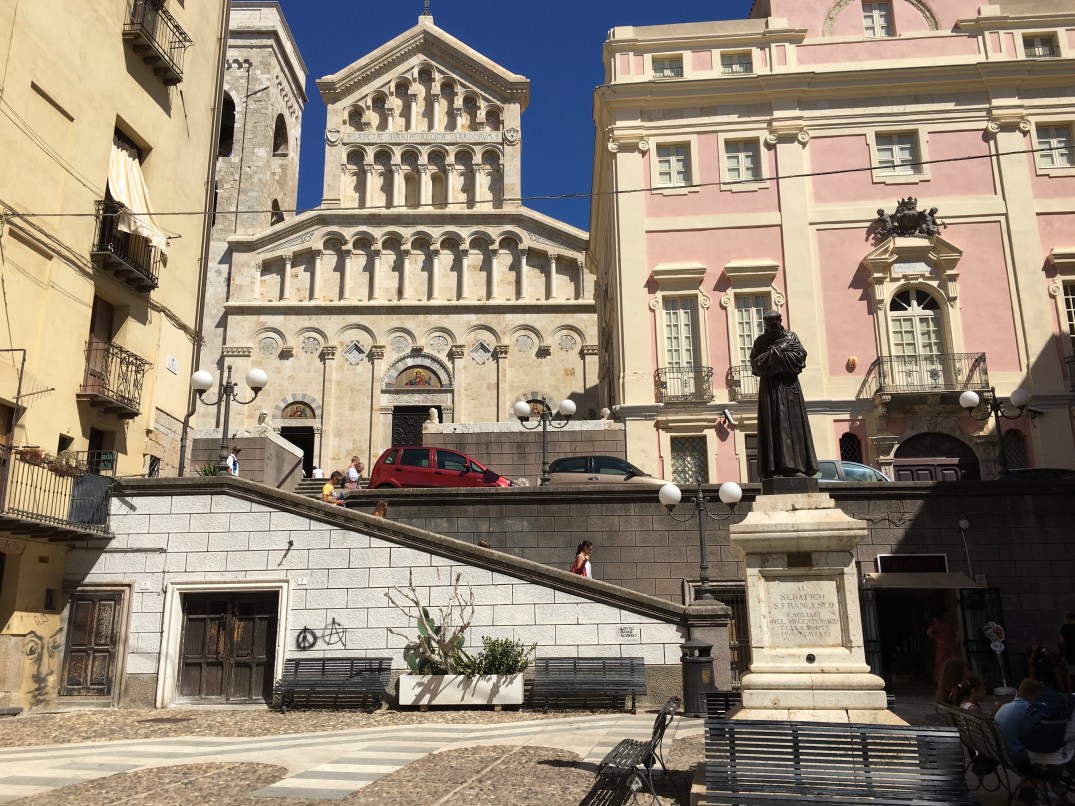
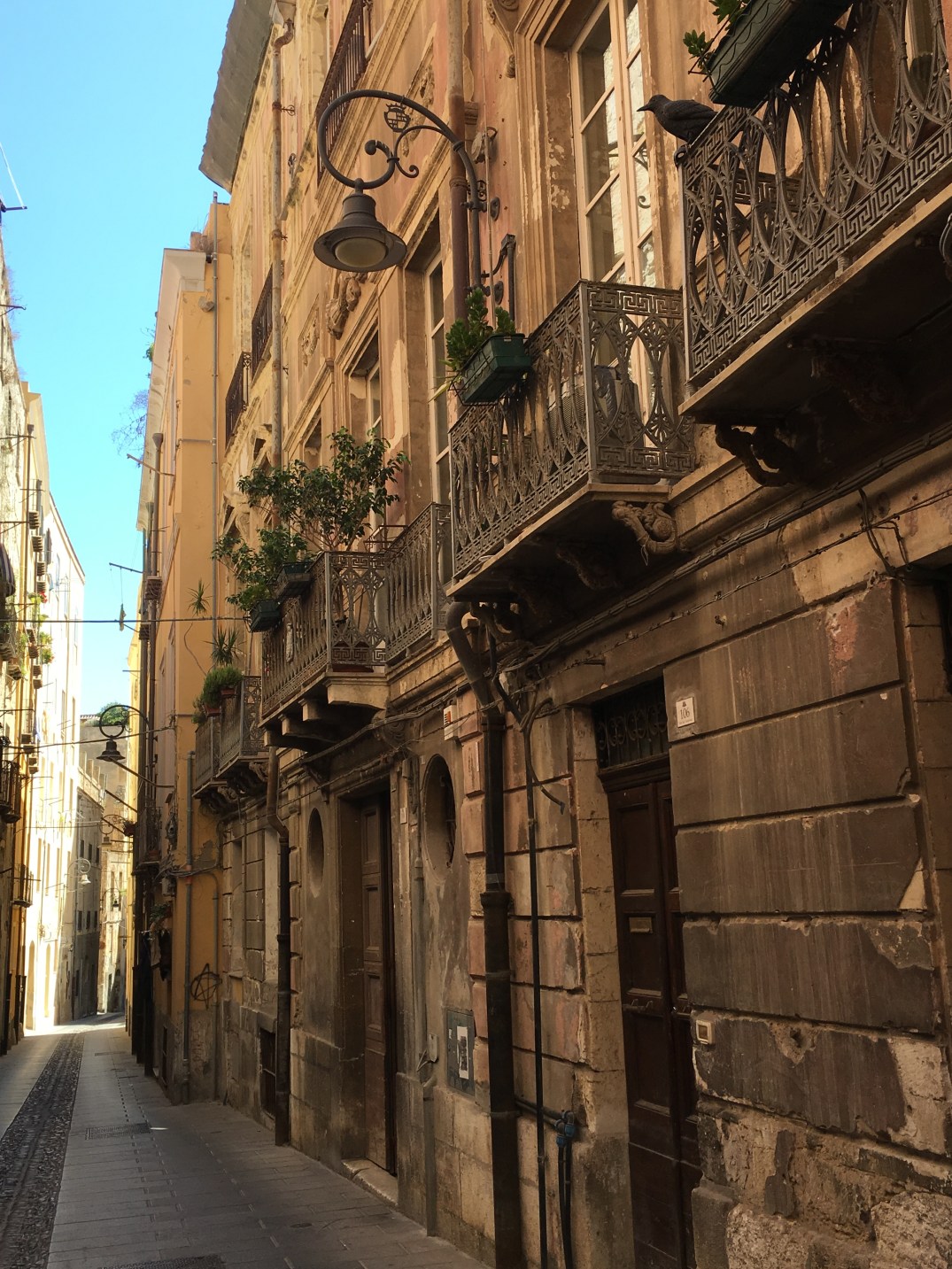
I’m at Caffè Libarium Nostrum on the castello of Cagliari, high up in the center of the old city. Libarium Nostrum is a longtime favorite. The food is good, but what draws me here is the view: the tiled domes and elaborate facades of Cagliari’s many churches, the Torre dell’Elefante to my left, the Via Santa Croce winding away to my right with its panorama over the city’s medieval walls. In among the elegant structures are the clotheslines and crumbling brick of a very living city. An Italian colleague from the mainland once claimed that Cagliari is ugly. Given that I think Cagliari is one of the most charming cities I know, I can only imagine he meant that – unlike Venice or Florence or Rome – Cagliari doesn’t look like a museum. And it doesn’t. Cagliari’s historic corners are full of modern grit. But that’s what I love about it. I love finding some of my favorite street art across the piazza from the cathedral. I love drinking cocktails in an underground room that was once a medieval cistern. I love that there’s a windfarm in the middle distance between the port and the mountains. Cagliari isn’t trying to be anything particular – it just is.

And that’s how it feels to be back in Sardinia. Here, I don’t try to be anything. I just am what I am: a slightly crazy American girl who keeps coming back to do archaeology in one of the coolest places she’s ever been. I’m weird, but still welcome. Foreign, but a member of the community. I leave a friend’s house in Siddi where I’m staying while I do my research, and people on the street welcome me back and ask me how long I’ll be around. I order a cappuccino in the piazza bar, where I’ve returned every summer since 2008, and another friend insists on paying. He asks me where my students are; I explain that this year I’ve come alone. We talk about the difficulty of finding funding for cultural projects and the importance of video in bringing archaeological results to a broader audience. I promise to do more, not only in English but also in Italian, and he says he’ll introduce me to his brother, a film editor.

I have until October 16 to complete my zooarchaeological study and get sufficient footage for a couple of videos. But right now, I’m coming off an intense five weeks doing the project in Akko. I’m giving myself until Friday just to enjoy being home.

IMG_6084
Cagliari’s gritty charm


fullsizeoutput_f7.jpeg
The cathedral on the castello
IMG_6111
The castello’s narrow streets

Cows’ Ankles and Sea Urchin Spines: A Day of Zooarchaeology at Tel Akko

Morning Lab
The zooarchaeology corner of the lab at Tel Akko this morning

My alarm went off at 4:15 am today. Work starts early at Tel Akko, and I like to run in the morning to wake myself up and collect my thoughts. When I open the lab at 5:30 am, I’m feeling alert and ready to meet the past. And it’s a good thing, too, because my tables are covered with piles of fragmented animal bones. It looks more like a mess than information.

I’m the zooarchaeologist at Tel Akko this year, and it’s my job to identify, record, and

Bos v OvisCapra astragalus
Ankle bones (astragalus) from cattle (left) and sheep or goat (right)

interpret the animal remains recovered by the excavations. Animal remains are an extremely common find on archaeological projects, and they provide a wealth of information about diet, economy, environment, social status, mobility, and other aspects of ancient cultures that archaeologists work to understand. But getting from broken bits of bone to a reconstruction of something like ethnic differences in food choice is a complex and painstaking process.

carnivore gnawed calcaneus
Another cattle ankle bone (a calcaneus this time) showing heavy gnawing by a carnivore

How does zooarchaeological analysis begin? One bone at a time. I examine each bone or bone fragment for the shapes and features that would allow me to identify it to species – if I’m lucky – or as close to species as possible. All kinds of factors come into play when I make these identifications. For example, an astragalus (ankle bone) of a cow has basically the same shape as the astragalus of a sheep or goat, but of course it’s much bigger. Telling the difference between the astragali of sheep and goats is much more difficult – only a few parts of the bone are different, and it’s best if all of them are preserved for me to make a really secure identification. Often this can’t be done, and I’ll record a bone as “sheep or goat.” That particular bone won’t help me tell if

rib with cut marks
A fragment of a rib from an unidentifiable mammal showing deep cut marks

Akko ever developed an intensive wool-producing industry, but it will contribute to answering other questions, such as how food preferences at the site changed over time with the influence of new ethnic groups. Zooarchaeological analysis is many-layered, and the only way to get at all the questions we’d like to answer is by collecting a lot of data.

Every bone fragment provides some kind of data – even those that are unidentifiable. Unidentifiable bones can still show evidence of being chewed by carnivores, often an indication of the presence of dogs on the site. Similarly, many bone fragments preserve evidence of rodent gnawing. Some bones may preserve cut marks and help us understand ancient butchery practices (one of my favorite studies in zooarchaeology uses differences in butchering practices to look at inter-ethnic marriage in the ancient world*). Burned bone fragments can tell us about both cooking and trash disposal.

Tal Akko micro
Partially sorted remains from flotation, showing (on right): fish remains (top), sea urchin spines (second from top), a snake vertebra (second from bottom), and a small mammal rib

Even tiny bones are important sources of information, and some of the bones I study at Tel Akko at very tiny indeed. These are the bones recovered through the process of flotation – taking samples of excavated sediment and processing them with water to extract carbonized plant remains and other tiny finds. The resulting animal remains are often only a few millimeters in size, but they can be one of our most important sources of information for the use of marine resources and the presence of reptiles, amphibians, and small mammals like mice on the site. If you’re not sure what mice have to do with to understanding the past check out this excellent study.

Zooarchaeology takes a long time, and today I worked seven hours before lunch and still feel like I’ve barely made a dent. After lunch, I’ll attend a lecture by another of the specialists at the site and then spend two hours washing the new bones that have come in from the last few days of excavation. At this point in the season, it feels impossible. I have to take a deep breath and remind myself that no matter how daunting it looks, it will all get done in the end. And when it does, we’ll be thousands of fragments closer to understanding the past at Tel Akko.

Tubs of bones
Waiting for me on Monday…

*  Gil J. Stein. 2012. Food Preparation, Social Context, and Ethnicity in a Prehistoric Mesopotamian Colony. In S. R. Graff and E. Rodríguez-Alegría (eds.), The Menial Art of Cooking: Archaeological Studies of Cooking and Food Preparation, pp. 47-63. University Press of Colorado, Boulder.


Hello, Akko

I arrived in Akko (Akka? Acre? It all depends…) at 4:30 am last Monday morning after a grueling series of three flights, a train, and finally a cab ride in which my lack of both Hebrew and Arabic proved problematic – especially on next-to-no sleep. I fell into my bed at the Nautical Academy for two hours, then got back up at 6:30 and navigated a full day of introductions and orientations on adrenaline-fueled enthusiasm that lasted until dinner. After dinner came the crash, a night of real sleep (I still woke up at 3 am, but – hey – that meant time for yoga), and then a second full day of site tours, lab set-up, database manipulations, staff meetings, and lectures.

It’s now after dinner on my third day on the Tel Akko project. My lab is set up, my database is running, I’ve begun recording bone identifications – I even started my morning with a jog along the sea. It’s been a productive start, jet lag notwithstanding, and I can finally take time to soak in the evening breeze and the call to prayer and say hello to Akko.

This is my first time in Israel – my first time in the Middle East – but much of what surrounds me is familiar and pan-Mediterranean: the glossy orange trees, the tall cypresses, the blazing daytime heat that turns 85°F into a cool evening, even the lean cats stalking the garbage and ignoring my calls. Other things I encounter are quite different from my experience further west – most of my Italian friends would be horrified by eggs and olives and raw tomatoes for breakfast – but they aren’t totally unfamiliar due to a few brief visits to Turkey. Some things, of course, are wholly new, and I admit to feeling destabilized confronting dual-language signs in Hebrew and Arabic, both unfamiliar alphabets. I got used to speaking Italian, to guessing at French, to at least sounding out Greek. With Hebrew and Arabic, I’m starting at zero.

But starting at zero makes for the best adventure, and I’m looking forward to the next four weeks living, learning, and working in this new country.  I’m feeling especially relaxed about it because I’ve already encountered another important characteristic shared across the Mediterranean: warm and immediate hospitality.

Packing and De-Packing

When I leave Corvallis, I’ll leave with a suitcase, a carry-on, and a computer bag. Every other possession that sits in my apartment must be disposed of – either sent to limbo in my mom’s basement, given to friends, donated to charity, or thrown away. Figuring out what to do with everything that can’t come with me is a stressful process, far worse than figuring out what to take. Packing is full of delicious anticipation – I love imagining the potential surprises of my next adventure. De-packing, on the other hand, is awful.

The worst thing about de-packing is that it’s full of guilt. For example: in the corner of my apartment sits a rescue bike I pulled off a curb the night before a city-wide junk pickup. The bike is in fine condition except that the tires are flat and the seat is missing a clamp to secure it. These are easy fixes, and shortly after I rescued the bike, I joined a bike collective where I had the necessary space and equipment. But that, my friends, is the end of the story of the bike. I never did those fixes, even though having a bike would have been pretty helpful. I could claim I’ve been too busy, but I’m suspicious when I use that excuse. Probably I was intimidated, probably I’m just lazy, probably I lack motivation… And so on chants the internal chorus of self-recrimination.

I confront many such failures when I’m de-packing. Most are banal: I arrived in Corvallis with three rolls of specially engineered dental floss, and I will leave with two-point-five (as well as insufficiently flossed teeth, apparently). When not displaying my failures, de-packing highlights my foibles: my skin is never so pampered as in the last weeks before a journey, as I frantically use up the pile of bath products I’ve amassed and won’t throw away.

But there is a silver lining to this painful process. Over repeated iterations of de-packing, the things I own become an ever-more-curated collection of the Absolutely Necessary and the Much Beloved. I learn more about who I am every time I de-pack because I’m forced to refine the everyday tools of being me. While there are many possessions I like, there are few possessions that actually enable me to be myself, and that’s the ultimate test. Shoes may be pretty, but if they aren’t comfortable after twelve hours of walking around a city, they won’t make the cut, even if they’re new.

De-packing is arduous but essential – the equivalent of molting for travelers. I’m pretty broken up that I’m finally donating an adored blazer I’ve carried on every adventure since I bought it in Paris in 2010. On the other hand, I’m pleased that a cocktail strainer I was given when a Corvallis restaurant closed will allow me to share my love of American mixology with my international colleagues at the Muséum national d’Histoire naturelle. Every time I de-pack, it strips me of a crust of accumulated stuff that has started to prevent the life it was originally meant to enable. I emerge from the molting feeling squishy, wide-eyed, and a little shocked, but also stronger – and ready to take on something new.

A Girl and Her Boots

I don’t own boots. The making of this travesty is complex, but I do not currently own hiking boots. An archaeologist without boots is like a sad knight from Arthurian legend who’s lost his sword and wanders the countryside lamenting to passers-by. An archaeologist without boots upends some kind of natural order.

I remember my boots. I got my first pair in high school: a basic pair of ankle-high Nikes that lasted all the way through college. I wore them until the soles split and the leather cracked at the toes. They were fine boots.

My next pair were mid-high Keens that I got for free because I was working at an outdoor outfitter. They were perfect – comfortable, light, flexible in the sole but supportive around the ankle. They saw me through my dissertation research and beyond, but eventually they, too, succumbed to the tolls of fieldwork. As with my first boots, I retired them by tying their laces together and hanging them high in a tree. I think of it as Viking burial for shoes.

In the background of this story, I confess, lurks a pair of Bad Boots – the source of my current predicament. To be fair, probably the boots weren’t really Bad. Probably they just weren’t right for me, an ill-fated boot-girl pairing that, once done, was hard to undo. The boots were all-leather Scarpas – rigid soles, rigid uppers. I bought them before leaving to study abroad at University College Cork, where I had every intention of joining the Hillwalkers Society.

I’ll take my share of the blame. I didn’t break the boots in properly before I left, and my very first trek with the Hillwalkers destroyed my ankles so badly it was also my last. The boots were relegated to the back of my Irish closet and I bitterly lamented leaving my good old Nikes at home.

But Scarpas are Expensive, so though I didn’t wear them again for years, I couldn’t quite get rid of them. They moved with me in boxes and bags through a series of grad school apartments. They survived a terrible basement flood that corroded the eyelets so badly that one of them simply snapped off. But still I kept the Scarpas, and after I had sent my Keens to the Great Excavation in the Sky, the Scarpas were the only boots left to accompany this impoverished postdoc on her year in Paris.

I tried to make it work, really I did. I wore the Scarpas while I did fieldwork in Sardinia, but since my “fieldwork” was basically all lab work that summer, my tenuous relationship with the boots was able to survive. We fell back on the rocks in September when I took them to Lozère on a hiking trip with a friend. I never let on, but my feet were hurting terribly midway through a four-hour hike along a trail of menhirs on the Cham de Bondons. The last straw came on a hike to the Cascade de Runes. It was more of a walk than a hike. There was an actual trail with a guide rail and everything. But the path was pretty steep and it was broken by a lot of large cobbles – my inflexible Scarpas tore my ankles apart as I tried to navigate the uneven terrain. It was so bad that I walked back in the water shoes I had brought for splashing in the falls.

It’s probably not their fault, but the Scarpas did not earn tree burial. When I left Paris, I chucked them in a donation bin across from the Jardin des Plantes, and may they be exactly what someone else needs. As for me, I’m going to Peak Sports to check out the newest mid-high Keens. I bet I will find love.

Leaving

I’m leaving again. My destination this time is Acre, Israel, where I will spend five weeks working as the zooarchaeologist on Penn State’s Tel Akko project.

I’ve learned that eight months is how long it takes me to acclimate to a new place. The first month is for locking down the basics. I figure out where the grocery store is. I get a job if I need one. I find the laundromat. I set up internet. I get a library card. I’m lonely, so I join a club. Or several clubs.

Months two and three are for figuring out logistics and making panicked adjustments. Where’s the doctor’s office? What about the optometrist’s? Can I walk there or should I figure out the bus schedule? I can’t afford half the groceries I’m buying: better figure out what’s actually in my budget.

Months four-through-seven are for fine-tuning. Maybe my job isn’t great. Maybe I’m not as close to some people as I thought I’d be. I find a new job, explore new friendships, try new coffee shops, look for better parks. There are always hiccups and false starts.

By month eight, things have fallen into place. I’ve settled into my job. I know the fastest route from my gym to my workplace. I know the most scenic route, too, for days when I have more time. I have a set of foods that I both enjoy and can afford. I have a favorite restaurant, a coffee shop with that precise, productive blend of ambient noise, a bar with a mean craft cocktail and a good crowd. I’ve made a real friend. If I’m lucky, I’ve made a few.

It takes me eight months to acclimate. That makes month nine the hardest time to leave.

I wasn’t destined to love Corvallis, but I didn’t know that when I decided to move here after Paris. I was excited to spend time with my best friend, and my head was full of visions of Portlandia – I arrived in Corvallis fully prepared to love my left coast, hipster hometown.

I didn’t. Corvallis lacks certain things I’ve discovered are important to my happiness: an art museum, for example. And an airport. Nothing about living in Corvallis has made me feel quite so isolated as being two hours from the nearest real airport. The smallest city is made global by an airport: the entire rest of the world is only as far away as the other side of the security line.

Still, it’s month nine, and I’ve put down enough roots to feel them getting torn up. I have a job I enjoy. I have friends. I have a French conversation group that I meet with when I can and a tenuous-but-growing connection to the university. I’ve started falling into the kind of spontaneous adventures that I love – just last week, a wine tasting with my friend Ana ended with the pair of us serving as social media models for Grochau Cellars.

Month nine is when I start seeing what life would look like if I stayed in a place, and despite being lived in the allergy capital of the US (who knew?), life in Corvallis would have its perks.

But archaeology is an itinerant profession, at least for many of us, and it’s the profession I love despite all the sacrifices it asks for. So I’m leaving again: already missing the friends I’ve made but looking forward to the broad horizon on the other side of security.